
Buy steel framing machine training as a specified deliverable, not a courtesy visit. Name the people who must be trained, list the tasks each of them has to perform unaided — set-up and changeover, production, profile checking, and safe isolation before anyone reaches inside the line — and release the final payment only after an assessor has signed off those tasks in writing.
What Should a Steel Framing Machine Operator Training Package Cover?
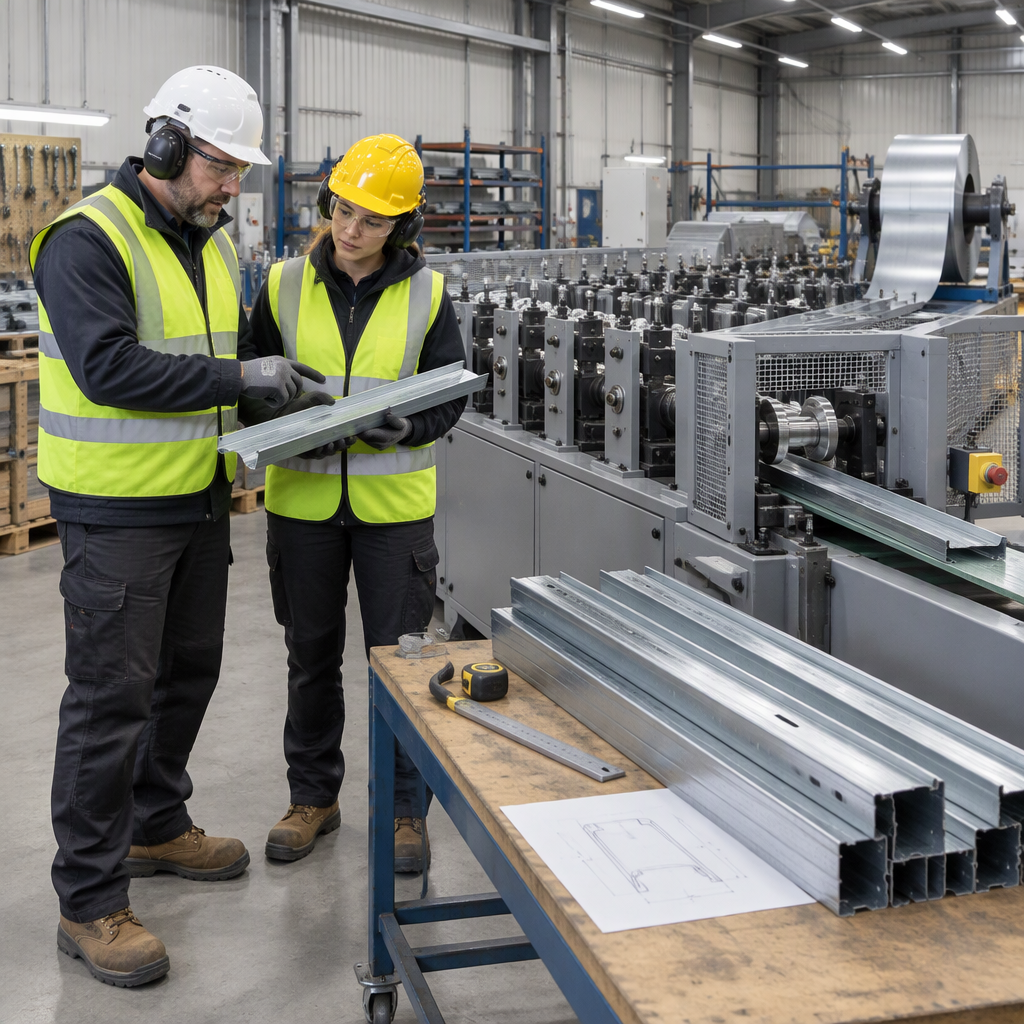
A workable package covers four things instead of one: setting the line up and changing it over, running production, checking the formed profile against the profile data, and the safety limits that apply to each task. Anyone who uses work equipment has to be trained in the methods of use, the risks involved and the precautions to take, and what counts as adequate training depends on the machine and the job.
RollMac describes its LGSF steel framing machine as making fully automated tooling changes for all profiles and automatic size changes across multiple profiles. On a line with that behaviour, the changeover skill shifts from adjusting rolls by hand to selecting the correct profile, confirming the line has applied it, and verifying the first-off piece before production continues.
- Set-up and changeover: loading the coil, selecting the profile and tooling, running the change, and signing off the first-off piece before the line is released to production.
- Production operation: starting, running and stopping the line, watching the formed sections as they come off, and reporting a fault rather than intervening outside the permitted methods.
- Forming quality: measuring the formed section against the profile data and the tolerances agreed in the order, then recording the result.
- Safety and precautions: recognising the risks of a running line and knowing the isolation steps for anyone who has to reach inside the guard line, including the rule that only the authorized individual who applied a lock and tag may remove them.
- Profile data and software: who is allowed to enter or change profile data, how a change is approved, and how the line is verified after the change.
- Escalation boundaries: which faults an operator may handle, and which must go to a competent maintenance technician working on plant that has been isolated and locked off.
Which Roles Need Training, and What Must Each Role Be Able to Do?
Split the training by role rather than counting heads, because what counts as adequate depends on the job and the equipment. Five groups usually need their own task list: machine operators, setter or changeover technicians, forming-quality checkers, maintenance technicians, and the production supervisor who owns the isolation rules.
| Role | Task to demonstrate unaided | Safety competence to verify |
|---|---|---|
| Machine operator | Start, run, monitor and stop the line within the agreed settings; stop and report a fault instead of reaching into the machine | Recognises when the line must be isolated, and never defeats a guard or interlock to keep production moving |
| Setter or changeover technician | Load the coil, select the profile and tooling, complete the change, and verify the first-off piece against the profile data | Trained for the duties the lockout program assigns to authorized and affected workers, and able to isolate the machine and fit a personal lock before entering it |
| Forming-quality checker | Measure formed sections, compare them with the profile data and the agreed tolerances, record the result, and hold back non-conforming work | Knows the forming hazards and the isolation rule before reaching into the line to take a sample |
| Maintenance technician | Diagnose and repair mechanical, hydraulic and pneumatic faults using the manufacturer's instructions | Competent and trained for the work, and works only after the plant is isolated, locked off and stored energy such as compressed air or hydraulic pressure has been released |
| Production supervisor | Decide who may run or change over the line, and confirm that each person's training record is current | Knows the machine's lockout procedure and its shutdown, de-energizing, energizing and start-up sequence, and applies it without exceptions |
How Should Safety, Isolation and Lockout Training Be Handled?
Isolation and lockout belong in the training of every role that could be exposed to a restart, stored pressure or moving tooling, not only in maintenance training. A lockout program assigns duties and responsibilities, documents an isolation procedure for each machine, fixes the shutdown, de-energizing, energizing and start-up sequence, and states what authorized and affected workers must be trained to do — the elements set out in this lockout/tagout fact sheet.
- Stop production with the normal stop control, and make sure the machine has come to a complete standstill before anyone approaches the tooling.
- Switch off and disconnect the electrical supply at the machine's isolator, and isolate the other energy sources on the line such as compressed air and hydraulic pressure, before any manual access. Fit your own lock and tag.
- Release stored energy, including trapped pressure and any parts held by springs or gravity, and confirm the plant has been made safe before maintenance or clearing work starts.
- Verify the isolation: attempt a normal start and confirm that nothing moves. Only then reach inside the guard line, and only for the tasks the manufacturer's manual permits.
- Keep your lock and tag in place for the whole task, through breaks and shift changes. If the job passes to someone else, that person fits their own lock rather than inheriting yours.
- Before restart, confirm the task is finished, tooling is secured, guards are back in place and everyone is clear; then the individual who applied the lock removes it.
- Never remove, defeat or work around a guard, interlock or light curtain to shorten a changeover. If a task cannot be done with the guards in position, isolate the machine first.
Fault-finding and repair work is only for people who are competent and who have been given sufficient information, instruction and training, and the plant has to be made safe before that work begins — requirements described in HSE guidance on maintenance of work equipment.
How Do You Verify Operator Competence Before Line Sign-Off?
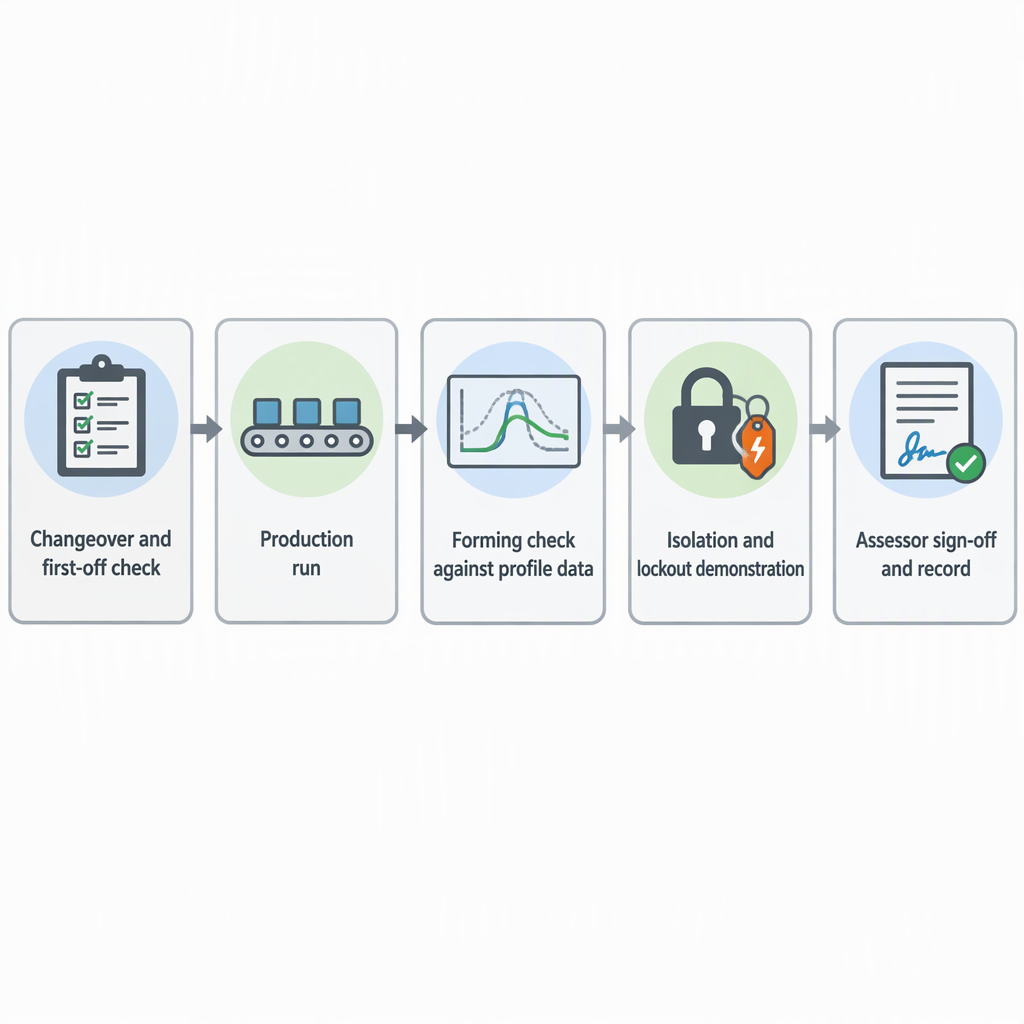
Accept the training by watching each named person perform the real tasks unaided, on your line, with your profiles. The assessor should be competent for the equipment and able to judge the skills attained, because adequacy is measured against the job and the machine rather than against attendance.
| Acceptance check | What to observe | Evidence to hold |
|---|---|---|
| Set-up and changeover | The trainee loads the coil or material, selects the profile and tooling, and completes the change without prompting | A signed record naming the profile and the task performed |
| Production run | The trainee starts, runs and stops the line, monitors output, and reports a fault in enough detail to act on | The assessor's note that the run was supervised but not assisted |
| Forming check | The trainee measures formed sections against the profile data and says what should happen to a section outside tolerance | A completed check sheet for the day of the assessment |
| Isolation and lockout | The trainee completes isolation, stored-energy release and verification unaided, and states who is permitted to remove the lock | A record of the lock and tag fitted, and the assessor's confirmation of the sequence |
| Fault boundaries | The trainee states which faults to escalate and which tasks the manual permits them to clear | A written role boundary list agreed with the supervisor |
The assessor is the part buyers most often skip. HSE guidance on training and competence for work equipment states that trainers should be competent for the equipment and able to assess the skills their trainees have attained, and that training may need refreshing at suitable intervals or when the equipment or the system of work changes.
What Should You Ask For in the RFQ and the Purchase Contract?
Write training into the commercial documents as a deliverable with named outputs, rather than accepting the general service description that comes with the machine. RollMac, for example, states that it provides professional installation, commissioning and training services, can dispatch engineers abroad, and offers a one-year warranty with on-site overseas maintenance support; those are service commitments, while the curriculum, the trainee numbers, the language and the assessment method remain yours to specify.
- Which roles are covered, listed against your own task list rather than a course title?
- Who delivers the training, and how many trainers attend on site?
- How many trainees can work hands-on per session, and what happens when you have more operators than that?
- Which language the training is delivered in, and whether the manual, screens and profile documentation are provided in your operators' language.
- Where the training happens — at the supplier's works, on your line during commissioning, or both — and what your plant must provide in space, power and material for hands-on practice.
- How competence is assessed, who signs the record, and whether the person assessing is competent for those tasks.
- What written records you receive per person, including the tasks assessed, the assessor's name and the date.
- What support continues after commissioning — remote help, and the warranty and maintenance visits referred to in the order — and how refresher visits are triggered and priced.
- How the payment schedule links to delivery of the assessment records, for example withholding a final instalment until the sign-offs are handed over.
- The number of training days and the cost, quoted against the task list and the number of trainees rather than as a default package.
What Training Records and Refresher Cycle Should You Keep?
Keep one record per person, per task: what was assessed, who assessed it and when. Set refresher training from events as well as from a calendar, because training may need refreshing at suitable intervals and whenever the equipment or the system of work changes.
Conclusion
Require training that names tasks, people and evidence: a role-based task list, hands-on practice, unaided assessment by someone competent to judge the skill, and per-person records you keep after the engineers leave. That is what turns a service statement into a deliverable you can accept or reject.
Pair the task list with a safety clause. Nobody reaches inside the guard line, clears a blockage or changes tooling until the machine is switched off, disconnected and locked off, and the person who applied the lock is the person who removes it. Confirm the isolation rules that apply on your site before the order is placed, and write the assessment records into the payment schedule so the training is finished before the line is accepted.
Frequently Asked Questions
Short answers to the questions buyers raise most often when they write training into a steel framing machine order.
Who is allowed to remove a lock or tag from an isolated machine?
Only the authorized individual who applied that lock and tag. That single rule is what makes isolation mean something, and it changes your shift handover: if a task continues, the incoming person fits their own lock, and the outgoing lock stays until its owner is finished with the job. Supervisors get no exception.
Can we train our own operators in-house instead of paying the supplier to do all of it?
Yes, when the people delivering it are competent, use the manufacturer's instructions and can assess the skills their trainees attain. In-house trainers usually handle refreshers, new profiles and induction well; the original commissioning training is normally better delivered by the supplier's engineers, who know that line's changeover sequence and fault boundaries.
Does training have to cover the framing software and profile data, or only the machine?
Cover both when the line takes its tooling and size changes from profile data. If the machine makes automatic tooling changes for all profiles and changes size across multiple profiles, someone at the plant must be able to enter or change profile data, confirm the line applied it correctly, and verify the first-off piece. Restrict who may edit profile data, and record what changed and who approved it.
How many days or hours should steel framing machine training last?
Define the duration from the task list instead of accepting a default package. Count the tasks each role must perform unaided, the number of people to be assessed and the machine time available, then agree the days and hours that cover them. Any duration quoted without that task list is a guess, and short sessions usually leave no time for unaided practice.
What language will the training be delivered in, and who trains operators after the supplier's engineers leave?
Agree this before the order is placed. RollMac states that it can dispatch engineers abroad to support international customers, which raises a practical question: whether those engineers and your operators share a working language. If they do not, budget for an interpreter who knows the machine terms, ask for the manual and profile documentation in your operators' language, and train one or two of your own people as in-house trainers before the engineers leave.
What training records should the plant keep?
One page per person: the tasks assessed, the date, the assessor, and any limitation such as may operate but must not change over. Keep it with the machine documentation, update it after each refresher or task change, and use it to decide who may run the line. Records are also what show an auditor, insurer or customer that competence was checked rather than assumed.


