
Views: 0 Author: Site Editor Publish Time: 2026-10-22 Origin: Site
The global shift toward energy-efficient construction has escalated the demand for insulated panels, forcing building material manufacturers to evaluate heavy capital investments in production equipment to remain competitive. Scaling panel production requires balancing upfront capital expenditure against target daily output, automation levels, and the versatility to handle different core materials like PU, EPS, and Rockwool without causing facility bottlenecks. You must navigate the complex integration of multi-stage machinery into existing workflows while maintaining stringent quality control over the finished product. This breakdown covers equipment capacity thresholds, operational workflows, and facility requirements. By understanding these technical parameters, plant managers can confidently evaluate and procure a sandwich panel machine that aligns with specific production goals and infrastructure capabilities.
Cost Variances: Entry-level, semi-automatic equipment requires lower initial capital expenditure, while high-capacity, fully automated continuous lines demand a significantly higher investment.
Capacity Thresholds: Production targets dictate equipment architecture; semi-automatic lines yield 500–1,000 sqm/day, whereas continuous lines achieve 1,500–3,000+ sqm/day with minimal labor.
Infrastructure Demands: Industrial sandwich panel manufacturing equipment requires substantial facility upgrades, often demanding 240 kW to 300 kW of total power and extensive linear floor space.
Vendor Vetting: Selecting a reliable sandwich panel machine supplier requires strict evaluation of their commissioning support, warranty terms, and the availability of standardized replacement parts.
Defining success criteria for your manufacturing facility starts with aligning daily square meter targets with actual market demand. Overestimating demand leads to over-capitalization, where expensive machinery sits idle on the shop floor. Underestimating demand creates severe production bottlenecks. When you force equipment to run beyond its rated duty cycle, you accelerate mechanical wear and increase maintenance downtime. You must establish a baseline of required daily output. Factor in peak seasonal demands and projected growth over a five-year horizon. This baseline dictates the fundamental architecture of the equipment you need to procure.
Theoretical machine capacity rarely matches real-world performance. Several operational variables impact your actual daily yield. Ambient temperature plays a massive role, particularly for PU curing times. Polyurethane foaming relies on an exothermic chemical reaction that is highly sensitive to the surrounding environment. If your facility experiences significant temperature fluctuations, the curing process will vary. Operators are often forced to slow down the line speed to ensure the panels do not delaminate after cutting. Sheet metal gauge variations also impact yield. Handling thicker steel requires slower roll forming speeds to prevent material deformation and excessive stress on the forming rollers. Furthermore, core material changeovers introduce unavoidable downtime. Switching from a standard PU core to a fire-rated Rockwool core requires machine recalibration and adhesive system flushing.
When evaluating automation levels, look directly at the labor-to-output ratio. Semi-automatic production lines require manual intervention at multiple stages. Workers must manually load materials, operate the panel presses, and handle end-of-line stacking. While these systems require a lower initial investment, they typically cap out at 500 to 1,000 square meters per day. They also depend heavily on operator skill to maintain consistent quality. Fully automatic systems drastically reduce manual labor. They utilize automated decoilers, continuous foaming heads, and robotic vacuum stackers. These lines comfortably produce 1,500 to over 3,000 square meters per day. The trade-off is the higher upfront capital required and the need for specialized maintenance personnel to service complex PLCs and servo motors.
The choice between continuous and discontinuous manufacturing processes hinges on your product mix. A continuous sandwich panel production line is engineered for high-volume, standardized production runs. Raw materials feed into one end, and finished, cut-to-length panels emerge from the other without interruption. This setup maximizes throughput and consistency. Conversely, discontinuous lines are designed for bespoke, variable-length, or specialized panel orders. Think of oversized cold storage panels or architectural facades that require unique joint profiles. Discontinuous manufacturing involves injecting foam into pre-assembled metal cassettes inside a stationary press. It offers unmatched flexibility at the cost of overall production speed.
Operating modern panel manufacturing equipment requires strict adherence to standardized workflows. This ensures product integrity and operator safety. The pre-production setup and calibration phase is the most demanding part of the shift. Operators begin by powering up the main control cabinets and inspecting the Programmable Logic Controller settings. They verify that the line speed, cutting lengths, and batch quantities match the daily production schedule. Temperature controls for the chemical tanks, hoses, and the double belt conveyor are calibrated to match the specific chemical formulation being used that day.
Simultaneously, raw materials are loaded onto the line. Forklifts position steel or aluminum coils onto the hydraulic decoilers. Chemical totes containing polyol and isocyanate are connected to the high-pressure metering pumps. Once calibration is complete, the active manufacturing phase begins. The metal sheets are pulled through leveling rollers to remove coil set. They then pass through corona treatment units if enhanced adhesive bonding is required. The top and bottom sheets enter the roll forming section simultaneously. A series of hardened steel rollers gradually shape the flat metal into the desired profiles, such as ribbed roof panels or flat wall panels.
Synchronizing the speed of the roller forming machine with the core material application is non-negotiable. For polyurethane panels, the high-pressure mixing head traverses back and forth across the bottom sheet. It dispenses a precise liquid chemical mixture. The top sheet is immediately guided down to meet the foaming mixture just as it begins to expand. The combined layers then enter the heated double belt conveyor. This component acts as a continuous moving press. The conveyor holds the metal sheets at a precise distance apart while the foam expands and cures. This ensures uniform thickness and density across the entire panel.
End-of-line processing handles the automated transition from the curing phase to final packaging. As the continuous panel exits the double belt, an automated flying saw clamps onto the moving panel. It cuts the material to the programmed length without stopping the line. The cut panels are rapidly accelerated down a run-out table. Vacuum stackers lift and arrange them into neat bundles. Finally, auto-packing machines wrap the stacks in protective stretch film. This minimizes manual handling, reduces operator fatigue, and prepares the goods for immediate dispatch.
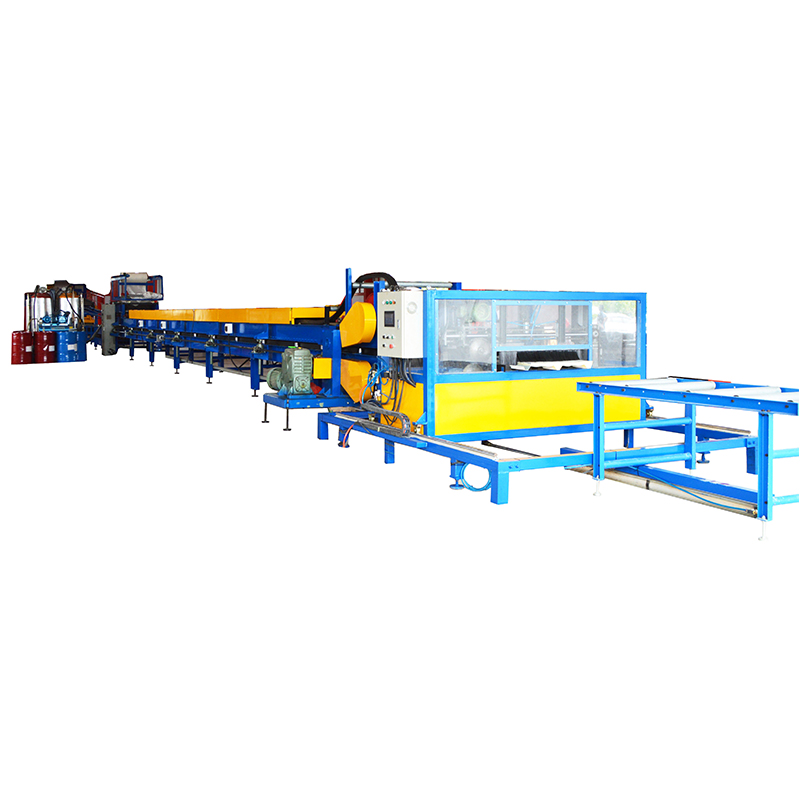
Understanding the individual components of the machinery allows for better maintenance planning and troubleshooting. The roll forming and sheet metal processing section is the mechanical foundation of the line. Industrial specifications typically require the equipment to handle steel or aluminum sheets ranging from 0.3 mm to 0.8 mm in thickness. The process starts with hydraulic decoilers that support coils weighing up to several tons. As the metal unwinds, an automatic film covering unit applies a protective plastic layer. This prevents scratching the painted surface during forming.
The precision roll forming stations use a series of progressively angled rollers mounted on heavy-duty shafts. High-quality machines utilize cassette-type roll formers. This allows operators to swap out entire roller assemblies quickly when changing panel profiles, drastically reducing setup time. Core material integration systems vary significantly depending on the insulation type. For a polyurethane sandwich panel machine, the high-pressure PU spraying and injection system is the most complex component. It consists of precise metering pumps that deliver exact ratios of polyol, isocyanate, and blowing agents to a high-pressure mixing head.
The mixing head uses impingement mixing to blend the chemicals instantly before dispensing them onto the lower metal sheet. Temperature control within the chemical tanks and delivery hoses is strictly regulated via water jackets. This ensures consistent fluid viscosity and reaction times. For lines producing EPS or Rockwool panels, the integration system shifts to adhesive application. Automated spray nozzles apply a two-component polyurethane glue to the inner surfaces of the metal sheets. Pre-cut blocks of EPS or Rockwool are then mechanically inserted and pressed between them.
The curing, cutting, and auto-packing systems dictate the final quality and presentation of the product. The double belt conveyor is a massive, heated caterpillar-style track. It provides the necessary resistance against the expanding foam. It is constructed from heavy steel slats and heated via circulating oil or electrical elements to accelerate the chemical curing process. Following the conveyor, the automated flying saw performs precision cutting. These saws use either band saw blades or circular blades. They are equipped with robust dust extraction systems to handle the fine particulate generated when cutting metal and insulation. Vacuum stackers utilize suction pads distributed across a gantry system to lift panels gently. This prevents damage to the interlocking joints and stacks them precisely for the auto-packing wrappers.
Procuring heavy manufacturing machinery involves complex financial planning that extends far beyond the sticker price of the equipment. Capital expenditure is generally categorized by machine tier and automation level. Low-tier, semi-automatic equipment requires a more accessible initial investment. This makes it suitable for regional manufacturers or those testing a new market segment. However, these systems incur higher ongoing labor costs and produce lower daily yields. High-tier, fully automatic continuous lines represent a major capital investment. These systems are engineered with premium components, advanced PLC integration, and robotic handling systems designed to run multiple shifts with minimal human intervention.
When budgeting for this equipment, procurement teams frequently overlook the hidden costs associated with international machinery purchases. Overseas shipping for a complete continuous line often requires multiple 40-foot open-top or flat-rack containers. This is due to the sheer size of the double belt conveyor and roll forming stations. Import duties, customs clearance fees, and inland freight to your facility add substantial overhead. Furthermore, specialized rigging and heavy lifting equipment must be rented to unload and position the machinery inside your plant. You must also budget for the Original Equipment Manufacturer technicians. Their travel, accommodation, and daily per diem rates during the on-site commissioning and training phase are standard industry requirements that must be factored into the initial capital request.
Evaluating operational expenditure and return on investment requires analyzing the long-term efficiency gains provided by the equipment. A highly automated sandwich panel production line reduces raw material waste through precise chemical metering and optimized cutting algorithms that minimize offcuts. Energy consumption is another factor. Modern heated double belt conveyors use advanced insulation and efficient heat exchangers to maintain curing temperatures with less electrical draw. Labor savings represent the most significant operational cost reduction. By replacing manual stacking and packing with automated gantry systems, facilities can reallocate personnel to quality control and logistics. This reduces the risk of workplace injuries and lowers overall payroll expenses.
Feature | Semi-Automatic Production Line | Fully Automatic Continuous Line |
|---|---|---|
Daily Output Capacity | 500 - 1,000 sqm/day | 1,500 - 3,000+ sqm/day |
Labor Requirements | High (Manual loading, stacking) | Low (Primarily monitoring and QC) |
Initial Capital Expenditure | Lower investment threshold | Major infrastructure investment |
Footprint Required | Moderate (Flexible layout) | Extensive (Long linear space required) |
Best Suited For | Bespoke orders, variable lengths | High-volume, standardized panels |
Installing industrial sandwich panel manufacturing equipment demands rigorous facility preparation. The electrical infrastructure must be robust enough to handle massive power draws without voltage drops. A standard continuous production line typically requires around 240 kW for the main operational power. Facilities must provision for up to 300 kW of total power to accommodate auxiliary systems like air compressors, chillers, and dust extraction units. A stable, industrial-grade grid connection is non-negotiable. Voltage fluctuations can cause PLC resets, disrupt the synchronization of servo motors, or alter the speed of the chemical metering pumps. This results in catastrophic material waste. Many plants install dedicated transformers and uninterruptible power supplies for the control cabinets to mitigate grid instability.
Floor space and layout optimization dictate the physical flow of your manufacturing process. Continuous lines require a massive linear footprint. They often exceed 50 to 100 meters in length from the decoilers to the final packing station. The foundation beneath the double belt conveyor must be heavily reinforced and perfectly leveled. If the floor sags, the conveyor will warp the panels during curing. Beyond the machine's footprint, plant managers must allocate extensive square footage for raw material staging. Steel coils, chemical drums, and pallets of Rockwool require organized, accessible storage. Finished goods storage is equally demanding. Sandwich panels are bulky and require wide aisles for safe forklift maneuvering during truck loading operations.
Environmental and safety controls are heavily regulated in panel manufacturing. Polyurethane foaming agents and isocyanates produce hazardous vapors. These require industrial ventilation and localized extraction hoods directly above the mixing head and conveyor entrance. If the line processes Rockwool or EPS, high-capacity dust extraction systems must be integrated into the flying saw and milling stations. This prevents combustible dust accumulation and protects operator respiratory health. Machine guarding standards must strictly adhere to local safety regulations. Perimeter fencing, light curtains at the entry and exit points of the press, and strategically placed emergency stop buttons are mandatory. They prevent crushing hazards and entanglement in the roll forming sections.
The hardware is only one half of the equation. The capability of your sandwich panel machine supplier determines the long-term viability of your production line. Technical support and commissioning expertise are paramount. A supplier must demonstrate a proven track record of deploying engineers to oversee the physical installation. They must perform the complex calibration of the chemical metering systems and conduct comprehensive Site Acceptance Tests. If a supplier relies solely on third-party contractors for installation, the risk of miscommunication and delayed ramp-up times increases significantly. Operator training provided by the OEM is equally critical. Your team must be trained on understanding the chemical reactions, troubleshooting hydraulic faults, and performing rapid profile changeovers.
Component sourcing is a major indicator of equipment longevity. When evaluating a supplier, scrutinize the bill of materials for the control systems and drive trains. Reliable manufacturers utilize internationally recognized brands for their PLCs, servo motors, variable frequency drives, and hydraulic valves. Using standardized, globally available components ensures that when a part eventually fails, your maintenance team can source a replacement locally within hours. You cannot afford to wait weeks for a proprietary part to be shipped from overseas. Equipment built with obscure, localized electronics will inevitably lead to extended, costly downtime.
Compliance and certifications verify that the equipment meets rigorous operational and safety standards. Ensure the supplier provides machinery that carries CE marking for European standards, UL certification for North American electrical safety, or ISO 9001 certification for manufacturing quality management. These certifications prove that the equipment has been engineered to withstand industrial environments. They confirm the machinery features adequate electrical shielding and incorporates failsafe mechanisms to protect both the operators and the facility.
Integrating a new production line into an active facility introduces significant implementation risks. Managing installation downtime is the most pressing concern for plant managers who must maintain existing customer orders. The standard mitigation strategy involves a phased approach. If replacing an older machine, build up a strategic inventory of finished panels before decommissioning the legacy equipment. Alternatively, prepare the foundation and electrical infrastructure for the new line in a parallel bay. This allows the old machine to run until the new system passes its initial factory acceptance testing on-site. This parallel installation minimizes the blackout period where no production occurs.
Operator error during the initial ramp-up phase is a primary cause of material waste and equipment damage. A new PU sandwich panel machine operates at higher speeds and requires tighter tolerances than legacy equipment. Mitigating this risk requires rigorous, OEM-led training protocols. Training should not be rushed into a single afternoon. It must cover cold-start procedures, emergency shutdown protocols, chemical ratio adjustments based on ambient temperature, and manual override procedures. Implementing a shadow program where operators work alongside the OEM technicians for the first two weeks of active production significantly reduces the learning curve. It prevents costly mistakes like running the double belt without proper chemical distribution.
Preventative maintenance is the only defense against catastrophic downtime. The complexity of a continuous line means that a failure in one small subsystem halts the entire operation. Plant managers must establish strict daily, weekly, and monthly maintenance schedules.
Daily tasks include flushing the high-pressure mixing head to prevent chemical crystallization, inspecting the flying saw blades for dullness, and checking hydraulic fluid levels.
Weekly maintenance should involve greasing the drive chains on the double belt conveyor and calibrating the thickness sensors.
Monthly routines require a deep inspection of the roll forming dies for wear and a complete diagnostic check of the PLC communication networks.
Documenting these procedures in a digital maintenance log ensures accountability and extends the operational lifespan of the equipment.
Audit your current facility to confirm you have the required 300 kW power capacity and sufficient linear floor space for a continuous line.
Define strict daily square meter production targets based on historical sales data and projected market growth to determine your required automation level.
Request itemized, landed-cost quotes from at least three vetted suppliers, ensuring all shipping, installation, and training costs are included.
Verify the local availability of critical spare parts for the PLCs and hydraulic systems proposed by the vendors to prevent future downtime.
A: Metal coils are decoiled and roll-formed into specific profiles. Core materials are applied between the top and bottom metal sheets. The assembly enters a heated double belt conveyor where it is pressed and cured. Finally, an automated flying saw cuts the continuous panel to length before it is stacked and wrapped.
A: A fully automated continuous line typically requires a linear footprint of 50 to 100 meters, depending on the length of the double belt conveyor and the cooling racks. Additional extensive square footage is mandatory for raw material staging, chemical storage, and finished goods maneuvering.
A: Continuous machines run without interruption, feeding raw materials in one end and outputting cut panels at the other, making them ideal for high-volume, standardized production. Discontinuous machines inject foam into pre-assembled metal cassettes in a stationary press, offering flexibility for custom, variable-length, or specialized panels at a slower production rate.
A: A fully automated continuous line typically requires 3 to 5 skilled operators per shift to monitor the PLCs, manage raw material feeding, and oversee quality control. Semi-automatic lines require significantly more personnel, often 8 to 12 workers, to handle manual loading, panel alignment, and end-of-line stacking.
A: Yes, multi-functional lines exist, but they require complex integration. The line must feature both a high-pressure chemical foaming system for PU and an automated adhesive application and mechanical insertion system for Rockwool. Switching between the two materials requires significant downtime for recalibration and cleaning.
A: A fully automatic continuous line can comfortably produce between 1,500 and 3,000+ square meters of finished panels per day, depending on the core material curing times, sheet metal thickness, and the efficiency of the automated end-of-line stacking and packing systems.
A: Industrial continuous lines generally require around 240 kW for main operational power. However, facilities must provision for up to 300 kW of total power to safely support auxiliary systems, heating elements, air compressors, and localized dust extraction units without causing voltage drops.


