
Views: 0 Author: Site Editor Publish Time: 2026-11-05 Origin: Site
Commercial metal roofing production carries high financial stakes. Equipment failure, material waste, and profile inaccuracies quickly erode profit margins on the factory floor. Manufacturers face a constant operational challenge every shift. You must balance high-speed production demands with exact profile tolerances. Machine longevity and operator safety remain equally critical when running heavy-gauge coils. Navigating these variables requires a structured evaluation framework based on real-world fabrication experience. We will explore how to assess technical specifications accurately before you finalize any equipment orders. You will learn how to avoid common purchasing pitfalls that lead to excessive downtime. This guide helps you select equipment aligning perfectly with specific production capacities, regional building codes, and shifting market demands.
Machine specifications must strictly align with your required sheet size, material yield strength, maximum thickness, and profile complexity to prevent premature wear.
Advanced PLC (Programmable Logic Controller) synchronization and stable hydraulic systems are non-negotiable for minimizing downtime and material waste.
Selecting the right profile capability (e.g., standing seam vs. corrugated) dictates your market positioning and long-term ROI.
A machine's structural build quality and frame technology directly impact panel consistency, vibration reduction, and overall lifespan.
Vetting a reliable metal roofing machine supplier requires looking beyond the initial price tag to evaluate turnkey support, warranty structures, and spare parts availability.
When you feed a 10,000-pound coil into a roll former, the material properties dictate everything. You will likely process galvanized steel, aluminum, copper, or prepainted coils. Each metal behaves differently under pressure. Aluminum requires highly polished rollers to prevent surface galling. Prepainted Galvalume demands precise clearances to avoid scratching the protective coating. Define your required minimum and maximum gauge capabilities upfront. Running 22-gauge steel requires significantly more structural rigidity than running 29-gauge agricultural panels. Thickness dictates the frame build and shaft diameter.
Evaluate material yield strength accurately. Grade 50 steel forms relatively easily. Grade 80 high-tensile steel fights back. Higher yield strength demands increased motor power and robust tooling. Spring-back effects in high-tensile materials require over-bending stations. If you ignore yield strength, your panels will bow and twist. Determine profile design complexity. Standard ribbed profiles usually need 14 to 16 forming stations. Complex architectural profiles often require 20 to 24 stations. Adding stations prevents material stretching. Gradual forming ensures precise bends and protects delicate paint coatings.
Calculate your required linear feet or meters per minute. This metric ensures you meet operational output goals. High-speed roll formers handle large-scale commercial demands effortlessly, pushing 150 feet per minute. Standard machines running at 50 feet per minute suit regional fabrication shops perfectly. Factor in operational realities when planning your floor layout. Changeover times reduce actual daily output significantly. Coil loading takes time and requires proper material handling equipment like overhead cranes or heavy-duty forklifts. Automated cutting efficiency impacts true daily yield.
Do not rely solely on maximum machine speed specifications. Plan around realistic operational capacity. Consider adding accumulator pits or automated stackers at the exit end. These additions keep the main line running continuously. High overall equipment effectiveness relies on minimizing manual interventions. If your operators spend two hours a day manually stacking panels, a faster machine provides zero additional value. You must match the machine speed to your material handling capabilities.
These systems excel in high-end residential and commercial architectural projects. They provide concealed fasteners and superior weather resistance. Evaluation criteria include seaming precision and rib height adjustability. You will encounter 1.5-inch and 2-inch rib profiles frequently. You must choose between heavy-duty in-plant models and portable on-site roll formers. In-plant systems run faster and handle thicker gauges. Portable units offer job-site convenience, allowing you to run continuous panels from the eaves to the ridge without end laps.
A reliable standing seam machine ensures watertight joints. Look for tooling that handles both snap-lock and mechanically seamed profiles. Versatility expands your project bidding capabilities. Ensure the machine includes clip relief rollers to accommodate mounting hardware without distorting the panel face. The ability to adjust the panel width on the fly provides a massive advantage when dealing with non-square roof decks.
This equipment suits agricultural, industrial, and traditional residential applications. These panels offer high structural integrity and classic aesthetics. Evaluate roller durability and consistent wave depth. Pitch accuracy remains critical for proper panel overlapping during installation. The system must handle high-tensile materials without causing micro-cracking at the wave peaks. Anti-siphoning grooves prevent capillary water action at the side laps.
Investing in a quality corrugated roll forming machine prevents panel distortion during rapid production. Ensure the cutting die matches the sinusoidal wave perfectly. Clean cuts prevent installation delays. A mismatched shear blade crushes the panel end, forcing installers to manually reshape the metal on the roof. The rollers must maintain exact pressure across the entire width of the sheet to prevent the material from walking off-center.
Aesthetic applications often mimic traditional clay or concrete tiles. They offer the lightweight benefits of metal without the structural reinforcement required for heavy masonry. Evaluate the precision of the hydraulic stamping press. Step-depth consistency matters greatly for visual appeal. Synchronization between roll forming and pressing stages ensures seamless overlaps. The pressing die must utilize high-grade steel to withstand repeated impacts.
A robust glazed roof sheet machine delivers high-quality architectural finishes. Check the hydraulic tonnage capacity. Deep steps require significant pressing force without stalling the line. The dwell time of the press must align perfectly with the line speed to prevent material buckling between the roll former and the stamping unit. Operators must monitor the stamping depth constantly to ensure the panels interlock correctly on the roof.
Manufacturing facilities often face limited floor space. Producing two distinct profiles on a single footprint solves this issue. You might combine trapezoidal and corrugated profiles on one chassis. Evaluate clutch mechanism reliability. You disengage the upper tier to run the lower tier. Shared motor efficiency impacts daily operations. Structural rigidity prevents vibration transfer between layers. Assess changeover complexity between the upper and lower tiers.
A versatile double layer roll forming machine maximizes production utility. Remember that you can only run one profile at a time. Plan your production schedules accordingly to maximize machine utilization. Ensure the control panel allows easy switching between the two profile programs without requiring manual sensor adjustments. The frame must support the weight of two complete tooling sets without sagging in the middle.
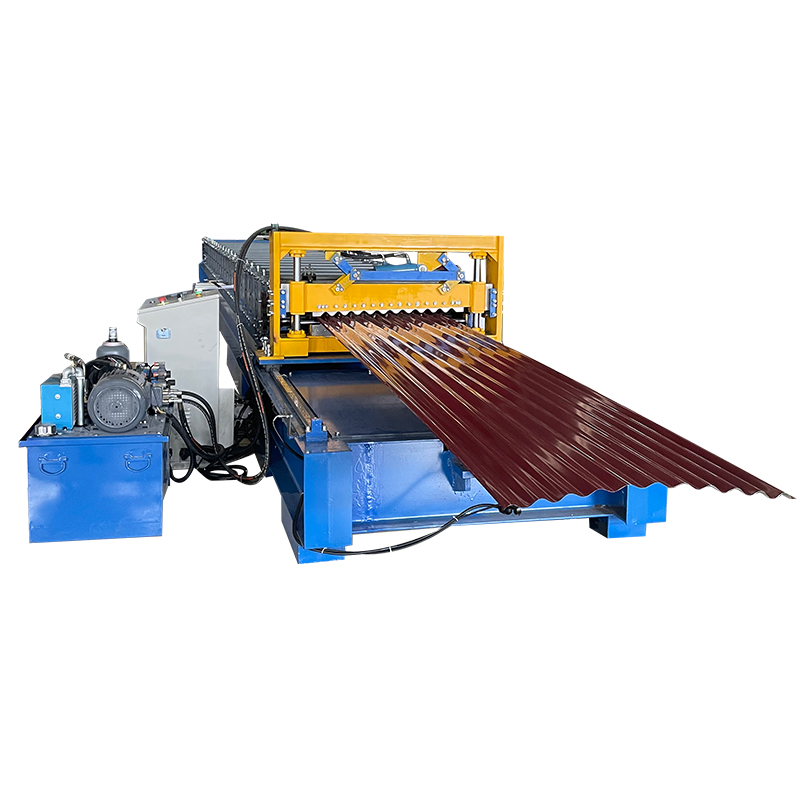
Examine base frame construction closely. Prioritize heavy-duty welded steel plate frames. Avoid lighter angle-iron frames entirely. Solid steel ensures structural rigidity under heavy loads. Manufacturers should stress-relieve welded frames through annealing. This process prevents warping over time. Superior build technology reduces vibration significantly. This translates directly to better panel quality.
A rigid frame eliminates profile distortion during high-speed runs. Check the leveling feet and floor mounting brackets. Proper installation anchors the system and dampens harmonic vibrations. If the frame flexes during operation, your panel dimensions will drift out of tolerance. Look for frames built from at least 5/8-inch steel plate. The side plates holding the shafts must bolt securely to the base frame with heavy-duty hardware.
Roller quality dictates long-term profile accuracy. It prevents material scratching on prepainted coils. Look for industry-standard benchmarks. Rollers should use 45# steel or Cr12. Hard chrome plating adds essential durability and corrosion resistance. CNC machining ensures exact roller dimensions down to 0.05mm tolerances. Prioritize solid, high-diameter shafts. Hollow alternatives risk deflection under heavy loads.
Shaft diameter should match the maximum material thickness. Thicker gauges require 80mm to 100mm shafts. Precision bearings support the shafts and reduce rotational friction. Check for easy clearance adjustments to accommodate different coil thicknesses. Operators need accessible adjustment points to fine-tune the tooling when switching from 26-gauge to 24-gauge coils. The spacers between the rollers must consist of seamless steel tubing to maintain exact lateral positioning.
Compare operational realities of different drives. Chain-driven systems remain cost-effective but require tension maintenance. A 1.5-inch pitch chain handles standard loads well. Gear-driven systems offer higher precision and longevity. They handle heavy-gauge materials better and eliminate the backlash associated with stretched chains. Assess motor power requirements. Power must match the thickness and complexity of the roofing sheet roll forming machine output.
Look for Variable Frequency Drives (VFD). Inverter controls provide smooth acceleration and deceleration. This prevents material jerking and protects the drive components. Dual-motor setups distribute torque evenly across long forming lines, preventing the lead stations from doing all the heavy pulling. Ensure the gearboxes use high-quality synthetic oil to reduce operating temperatures during continuous shifts.
Programmable Logic Controllers manage length measurement and batch counting. They control overall line automation seamlessly. Poor PLC synchronization carries heavy risks. You face inaccurate cut lengths and excessive scrap. Sensor faults cause frustrating downtime. Verify inclusion of critical safety technologies. Look for integrated emergency stop circuits. Physical guarding protects operators from moving parts.
Automated fault-detection alarms prevent catastrophic failures. High-quality rotary encoders measure coil feed accurately. Remote diagnostic capabilities allow technicians to troubleshoot software issues off-site. A reliable PLC system from brands like Omron, Siemens, or Mitsubishi ensures long-term parts availability. The touchscreen interface must support multiple languages and allow operators to input complex batch orders easily.
Evaluate the hydraulic pump station carefully. It powers post-cut shear and stamping mechanisms. Identify warning signs of unstable systems. Pressure drops indicate internal leaks or failing valves. Overheating during continuous shifts ruins fluid viscosity. Slow cycle times bottleneck production lines. A stable hydraulic unit ensures clean, precise cuts.
Look for proportional valves that control fluid flow smoothly. Air cooling or water cooling systems regulate oil temperature during summer months. Large reservoir tanks dissipate heat effectively. Clean hydraulic fluid prevents premature pump wear. Ensure the system includes an accumulator tank to provide instant pressure for rapid shearing operations. The hydraulic hoses must feature wire-braid reinforcement to handle high-pressure spikes safely.
Analyze trade-offs carefully before purchasing. Purchasing cheaper, entry-level machines saves money upfront. Investing in industrial-grade equipment secures long-term reliability. A premium metal roofing machine reduces maintenance intervals. Discuss energy efficiency considerations with manufacturers. Power stability requirements matter greatly. Adaptability for varying environments is a major factor. Operating in developing countries or remote sites involves fluctuating power grids.
Calculate continuous operation costs accurately. Downtime impacts the bottom line severely over a 10-year lifecycle. Material scrap reduction provides immediate return on investment. Precision cutting eliminates wasted panel ends. A 2% scrap reduction on a million pounds of steel pays for the machine upgrade quickly. Factor in the cost of replacement parts and the availability of local service technicians when calculating your long-term operational budget.
Establish strict criteria for supplier selection. Demand manufacturing transparency. Look for ISO and CE certifications. Suppliers must willingly conduct Factory Acceptance Testing (FAT). During FAT, run multiple coil types to verify tolerances. Assess after-sales support thoroughly. Domestic availability of proprietary spare parts prevents extended delays.
Comprehensive turnkey installation matters. Commissioning services ensure your line starts smoothly. Partnering with a reputable metal roofing machine supplier guarantees ongoing operational success. Review their warranty structures carefully. Ensure coverage includes critical components like PLCs, hydraulic pumps, and drive motors. Ask for references from other fabrication shops running the exact same equipment model.
Failing to match machine specifications to regional material standards causes immediate issues. Building codes dictate panel strength and profile dimensions. Underestimating the need for production flexibility limits growth. Locking into a single-width machine hurts when market demand shifts toward variable widths. Overlooking the post-cut shear system creates jagged edges.
Using inferior blade materials like standard tool steel fails quickly. Always specify Cr12MoV for shear blades. This high-carbon, high-chromium steel holds a sharp edge longer. Ignoring electrical voltage differences between countries damages sensitive electronics. Verify whether your facility runs on 480V 3-phase or 380V power before finalizing the order. Do not assume the manufacturer knows your local electrical standards.
Address the learning curve immediately upon installation. Advanced PLC systems require dedicated training. Automated coil cars need proper handling procedures. Establish strict lockout/tagout safety protocols. Outline a baseline preventative maintenance schedule. Implement daily startup procedures to catch minor issues before they cause major breakdowns.
Inspect the uncoiler mandrel for proper expansion and secure coil seating.
Verify the rotary encoder wheel rests firmly against the material surface without slipping.
Check hydraulic fluid levels and ensure the cooling fan operates correctly.
Run a test panel to verify length accuracy and profile dimensions before starting the main batch.
Component | Maintenance Frequency | Required Action |
|---|---|---|
Forming Rollers | Weekly | Inspect for metal shavings and clean surfaces with approved solvents. Check for chrome flaking. |
Shaft Bearings | Monthly | Apply industrial-grade grease to reduce rotational friction. Listen for grinding noises during operation. |
Drive Chains | Bi-weekly | Check tension levels and lubricate links to prevent snapping. Adjust idler sprockets as needed. |
Hydraulic Fluids | Annually | Test fluid viscosity, check for contamination, and replace inline filters. Drain and clean the reservoir. |
Shear Blades | Quarterly | Inspect for dullness or chipping. Sharpen or replace as needed. Verify blade clearance gaps. |
PLC Enclosure | Semi-Annually | Vacuum dust from cooling fans and inspect wire terminal connections for tightness. |
Request detailed technical proposals from shortlisted manufacturers to compare specifications side-by-side.
Arrange factory visits or virtual demonstrations to inspect build quality and operational smoothness.
Conduct material run-tests using your specific metal coils to verify profile accuracy and coating protection.
Review warranty terms and spare parts availability before signing any procurement contracts.
A: A well-maintained industrial roll former typically lasts 15 to 20 years. Heavy-duty frames and premium rollers extend operational life. Regular preventative maintenance, including lubrication and hydraulic fluid checks, prevents premature component failure.
A: Complex architectural profiles often require 20 to 30 forming stations. Standard corrugated panels usually need 14 to 16 stations. More stations ensure gradual metal bending. This prevents material stretching, cracking, and coating damage.
A: Yes. Double layer machines produce two distinct profiles on one frame. Cassette-style machines allow operators to swap entire tooling sets. These options maximize floor space and production flexibility for diverse market demands.
A: In-plant machines feature heavy-duty frames, higher speeds, and greater gauge capacities. They suit large-scale factory production. Portable machines are lighter and easily transported to job sites. They allow contractors to roll form panels directly on the roof.
A: Inspect rollers weekly for metal shavings and debris. Clean surfaces with approved industrial solvents. Never use abrasive tools on chrome-plated rollers. Verify alignment periodically to ensure consistent panel profiles and prevent uneven wear.
A: The PLC controls line speed, shear timing, and batch counting. Perfect synchronization ensures exact panel lengths and minimizes material scrap. It also manages safety interlocks, protecting operators and preventing catastrophic machine damage during high-speed runs.
A: Look for comprehensive coverage on critical components like the PLC, hydraulic pump, and drive motors. Ensure the warranty covers at least one year of operation. Verify that the supplier provides remote troubleshooting and guarantees the availability of proprietary spare parts.


