
Views: 0 Author: Site Editor Publish Time: 2026-11-02 Origin: Site
Investing in industrial roll forming equipment is a high-stakes capital decision. The impact of a mismatch—measured in material waste, downtime, and rejected panels—far outweighs the initial setup effort. Manufacturers frequently struggle to align specific regional market demands with the correct machine architecture. Unique rib heights, material thicknesses, and aesthetic finishes require specific tooling. Misalignment often leads to production bottlenecks, poor operational stability, or premature equipment wear.
This guide provides a technical evaluation framework to assess machine specifications. You will learn how to match equipment to specific roofing profiles effectively. We explore the trade-offs between production speed, machine durability, and long-term operational efficiency. By understanding the core mechanics of a roof panel machine, you can ensure your production line meets local architectural codes while maintaining high yield rates.
Profile Dictates Architecture: The exact dimensions, finish, and type of panels (e.g., low rib, high rib, step-tile) must drive the selection of the forming stations and roller configurations.
Structural Integrity is Non-Negotiable: A heavy machine frame and durable rollers are critical for production stability and minimizing vibration during high-speed operation.
Control Systems Drive Yield: Stable PLC control systems are essential for accurate batch processing, minimizing scrap rates, and ensuring precise cutting lengths.
Space vs. Output Trade-offs: Dual-profile capabilities offer footprint efficiency, but dedicated single-profile machines provide higher continuous throughput for scaling operations.
Regional construction standards dictate the exact profile you must produce. You must assess local requirements for low rib versus high rib profiles. Low rib panels generally serve residential or light commercial applications where extreme weather is less of a concern. High rib profiles offer superior structural spanning capabilities. They handle heavy snow loads and severe wind uplift effectively. You must evaluate real-world cases for specific load-bearing standards in your target region before finalizing any equipment specifications.
Identify exact regional profile standards before selecting equipment. Common profiles include TR4, R-Panel, AG Panel, or 7/8" Corrugated designs. Ensuring your tooling matches local architectural codes prevents product rejection on the job site. You also need to determine the required panel widths. Calculate the feeding width of the raw coil against the effective width of the finished panel. Proper width calibration ensures the machine handles standard coil sizes without excessive edge trim waste.
To systematically define your market requirements, follow these field-tested steps:
Audit local building codes to determine the minimum required rib height and panel overlap for weatherproofing.
Survey local coil suppliers to confirm the standard feeding widths available in your region (typically 914mm, 1000mm, or 1220mm).
Calculate the effective coverage width of the finished panel to determine the exact material yield per coil.
Identify the dominant fastening method in your market (exposed fastener vs. concealed clip) to dictate the edge profile design.
Project your peak seasonal daily output to decide between standard-speed and high-speed machine configurations.
The raw material dictates the mechanical stress placed on the forming rollers. Define the exact materials you intend to process. Common materials include galvanized steel, prepainted aluminum, and bare galvalume. Each metal exhibits different spring-back characteristics during the cold forming process. Aluminum requires different roller clearances compared to steel to prevent stretching or tearing along the rib edges.
Establish the required thickness range for your production line. Standard roofing typically requires thicknesses between 0.3mm and 0.8mm. You must also identify the maximum yield strength of the steel. Mild steel usually sits around 235 MPa to 300 MPa. High-tensile steel, often used in industrial applications, can reach 550 MPa (G550) or higher. Forming G550 steel requires significantly more roller stations to gradually bend the metal without fracturing the coating. The machine must reliably form these materials without stalling the main motor or deflecting the roller shafts.
Calculate your required daily output to determine the necessary machine speed. Standard machines operate at 12 to 15 meters per minute. This speed suits moderate regional demand and single-shift operations. If you face peak seasonal demands or run multi-shift schedules, you need a high-speed setup. High-speed roof panel roll forming equipment operates at 25 to 30 meters per minute or faster. Faster machines require heavier frames, larger motors, gearbox transmissions, and advanced hydraulic cooling systems to maintain continuous operation without overheating.
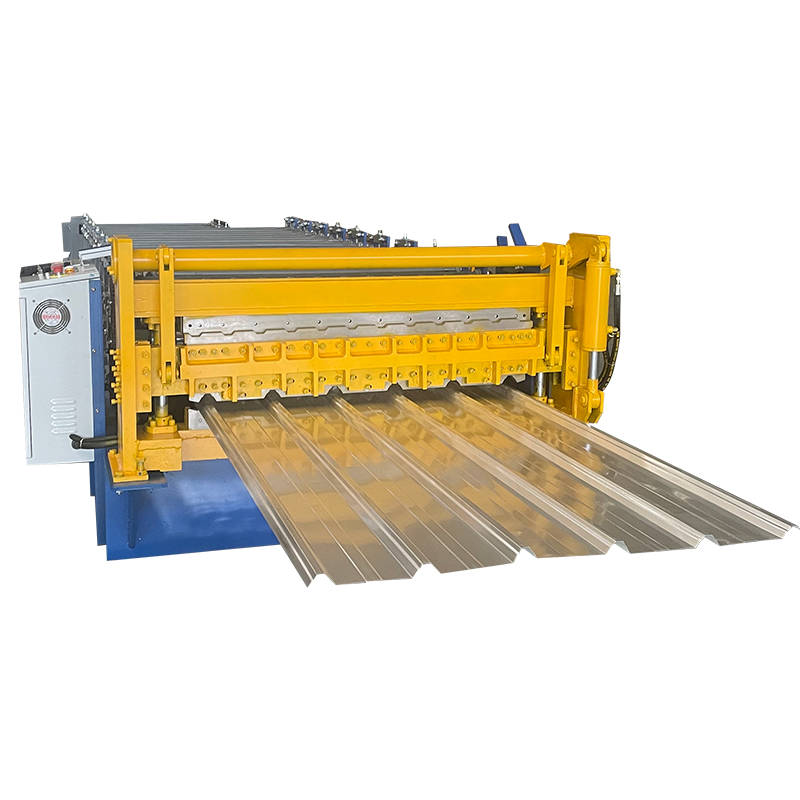
A corrugated roof panel machine handles high-volume production of traditional sinusoidal or trapezoidal profiles. These profiles dominate commercial, agricultural, and industrial applications due to their excellent strength-to-weight ratio. When evaluating this equipment, focus on the feeding guides and the cutting system. Look for robust entry guides with adjustable rollers to prevent coil wandering as it enters the first station. You need high-tonnage hydraulic cutting systems equipped with Cr12MoV blades to handle continuous, heavy-duty cycles. This ensures production stability over multi-shift operations and guarantees a clean, burr-free cut every time.
Architectural and high-end commercial projects require weather-tight, hidden fastener systems. A standing seam roof panel machine produces these specialized profiles. This equipment requires precise roller alignment because the locking seams must engage perfectly during on-site installation. Even a one-millimeter deviation in the seam profile can cause the roof to leak or the seaming tool to jam. Evaluate machines with adjustable width capabilities. Motorized PLC controls or manual handwheels allow operators to switch between varying panel sizes quickly, accommodating different roof deck dimensions without needing a completely separate machine.
Residential markets often demand the aesthetic of traditional clay or concrete step-tiles. Metal provides these aesthetics alongside significant lightweight benefits, reducing the structural load on the roof trusses. A glazed sheet roll forming machine creates this specific look. The evaluation focus here rests heavily on the pressing mechanism. The machine must include a synchronized hydraulic pressing module. This step-pressing action must integrate seamlessly with the roll forming and cutting phases. The machine rolls the profile, stops precisely, presses the step, and then continues. Proper synchronization avoids profile distortion and ensures consistent step depth across the entire length of the panel.
Facilities with strict floor space constraints often look to maximize their profile offerings without expanding their factory footprint. A double layer roofing machine serves this exact purpose. It produces two distinct profiles on one chassis, typically stacking a corrugated profile on the bottom and a trapezoidal profile on the top. However, it cannot run both profiles simultaneously. Key points to check include the shared motor and drive system capacity. Assess the changeover time between upper and lower deck operations, which usually involves switching a clutch or moving the entry guide. Ensure the frame is heavy enough to support the dual-station weight without micro-deflections during operation.
Machine Category | Best Application | Key Technical Focus | Typical Operating Speed |
|---|---|---|---|
Corrugated Profile | Industrial & Agricultural | High-tonnage hydraulic cutting, robust feeding guides | 15 - 30 m/min |
Standing Seam | Architectural & Commercial | Precise roller alignment, adjustable width mechanisms | 12 - 20 m/min |
Glazed Step-Tile | Residential Aesthetics | Synchronized hydraulic step-pressing integration | 3 - 6 m/min (due to pressing stops) |
Double Layer | Space-Constrained Facilities | Heavy frame rigidity, shared motor capacity | 12 - 15 m/min |
The foundation of any roll forming operation is the chassis. A heavy machine frame built from welded H-beams (typically 350mm or 400mm) or thick steel plates is mandatory. Light frames cannot absorb the immense stress of forming high-yield steel. Over time, a light chassis will warp under the continuous rotational torque of the drive system. Warping throws the roller stations out of alignment, resulting in twisted, bowed, or cambered panels that fail quality control inspections.
A rigid base directly correlates to vibration reduction. High-speed operations generate significant kinetic energy. A heavy frame dampens these vibrations, ensuring production stability. This reduces the frequency of manual roller recalibrations. It also extends the lifespan of internal transmission components by preventing misalignment-induced wear on the bearings and drive chains. Always inspect the welding quality on the chassis; continuous, deep-penetration welds are required over spot welds.
The rollers make direct contact with your raw material. They must be exceptionally durable to withstand thousands of hours of friction. Industry-standard materials include 45# steel or Cr12 mold steel. These rollers must undergo CNC machining for exact dimensional accuracy and receive hard chrome plating (typically 0.05mm thick). Chrome plating is critical when operating a color steel roofing sheet machine. The smooth, hardened finish prevents the rollers from scratching or peeling the pre-painted surface of the metal coils.
Shaft specifications determine the machine's ability to handle thick or high-tensile materials. Solid steel shafts are non-negotiable. Depending on the profile depth and material thickness, shaft diameters typically range from 70mm to 90mm. These shafts must be machined with high precision and supported by heavy-duty bearings. Undersized shafts will deflect under pressure when forming thick steel. Shaft deflection causes uneven forming, creates edge waves in the panel, and destroys the roller bearings over time.
Power transmission dictates machine efficiency and forming consistency. Standard machines often use 1-inch or 1.2-inch chain drives. Chain drives are highly effective for standard speeds and thinner gauges. They are easy to maintain and cost-effective to replace. However, high-speed or heavy-gauge forming requires a gearbox drive system. Gearboxes provide consistent, slip-free torque transfer to every roller station simultaneously. They eliminate the slack and jerking motions sometimes associated with worn chains, ensuring a perfectly smooth feed rate.
The hydraulic station powers the cutting and pressing mechanisms. Evaluate the hydraulic pump power carefully, ensuring it matches the tonnage required to shear your thickest material. Look for integrated cooling systems, such as fan coolers or water chillers. Continuous operation heats hydraulic fluid rapidly. Overheated fluid loses viscosity, leading to sluggish cutting action and incomplete shears. High-quality solenoid valves ensure clean, burr-free post-cutting without stalling during long shifts.
Modern roll forming relies entirely on automation. Stable PLC control is a fundamental requirement for any profitable operation. Industrial-grade PLCs from brands like Siemens, Mitsubishi, or Yaskawa provide reliable length measurement and batch counting. A robust PLC minimizes operator error. The operator simply inputs the required length and quantity via the touchscreen interface, and the machine handles the rest, ensuring consistent panel dimensions across massive production runs.
Inverter and encoder integration work alongside the PLC to control the physical movement of the material. The inverter controls the main motor speed. It allows for smooth starts and decelerations before the cut, preventing material jerking and reducing mechanical shock to the drive system. The rotary encoder rests on the moving material, measuring the exact length passing through the machine. It sends real-time pulse data to the PLC, ensuring cutting tolerances remain within ±2mm.
Power grid adaptability is crucial in regions with unstable electricity. Assess whether the electrical cabinet includes built-in voltage stabilizers and proper grounding. Power surges can instantly fry sensitive PLC microprocessors and inverter boards. Proper electrical shielding protects your automation investment from local power fluctuations and keeps your line running.
Evaluating equipment requires looking beyond the initial acquisition phase. You must analyze the trade-off between manually adjusted machines and highly automated systems. Entry-level machines require manual spacer adjustments and wrench work when changing material thicknesses or adjusting for slight profile variations. Automated, cassette-style quick-change systems allow operators to swap entire roller assemblies in minutes using an overhead crane. This drastically reduces downtime, increases overall factory throughput, and allows you to take on smaller, diverse custom orders profitably.
Routine maintenance keeps the production line moving and prevents catastrophic failures. Factor in the availability of common spare parts in your local market. Chains, hydraulic seals, and cutting blades wear out naturally and require periodic replacement. Ensure the machine design allows easy access to the transmission system. Operators must perform routine lubrication on bearings and chains without dismantling major safety guards. Complex architectures that hide grease points often lead to neglected maintenance, resulting in premature bearing failure and seized shafts.
Material waste destroys operational margins faster than any other factor. A high-quality machine with stable PLC controls pays for itself by minimizing scrap. Precise encoders prevent panels from being cut too short (which makes them unusable) or too long (which gives away free material). Rigid frames prevent profile twisting, which leads to rejected batches on the job site. By reducing the percentage of out-of-spec panels, you maximize the yield from every steel coil, directly improving your bottom line.
Industrial roll forming draws significant power. Assess the total kilowatt (kW) requirement of the main motor and the hydraulic station. Compare this requirement against your factory's existing power infrastructure. Upgrading factory transformers to accommodate a massive machine adds significant delays and costs to your deployment timeline. Highly efficient motors and optimized hydraulic pumps help keep daily energy consumption manageable, reducing your monthly utility overhead.
A roll forming line requires substantial floor space. You must plan for the physical space required by the machine itself, which can range from 6 to 12 meters long. Additionally, account for the uncoiler. Hydraulic uncoilers take up more room than manual ones but handle heavier coils (up to 10 tons) safely and feed the machine automatically. You also need space for run-out tables, automatic stackers, and raw material staging areas. Proper workflow planning prevents forklift traffic jams on the factory floor and ensures finished panels can be packed and loaded onto trucks efficiently.
Consider container shipping logistics early in the procurement process. Ensure the machine's dimensions are optimized for standard 20ft, 40ft, or 40HQ shipping containers. Standard machines usually fit easily. However, oversized machines or lines with extensive automated stacking equipment may require flat-rack containers or break-bulk shipping, which dramatically increases international freight expenses.
Heavy machinery faces risks during ocean transit and overland trucking. Misalignment during shipping is a common issue. Heavy seas or rough roads can shift internal components slightly, throwing the roller stations out of parallel alignment. Highlight the necessity of proper commissioning. Rely on on-site engineer visits or detailed remote video commissioning provided by the manufacturer. Never run a new machine at full speed without verifying roller alignment, checking hydraulic pressure settings, and running a few test panels at a slow jog speed first.
Auditing your equipment supplier mitigates deployment risks and ensures you receive what you paid for. Request raw material certificates for the rollers and shafts to verify the steel grade. Verify that the PLC software includes language options suitable for your local operators (e.g., English, Spanish, Russian). Demand clear warranty terms specifically covering electrical components, hydraulic pumps, and PLC boards.
Implement a strict pre-purchase inspection checklist before authorizing the final balance payment. Demand video proof of the machine running the exact specified coil thickness at maximum speed. The video must clearly show the cutting action, the deceleration process, and the finished profile tolerances measured with a caliper. Verify all CE or ISO compliance certifications to ensure the equipment meets basic industrial safety standards.
The right roof panel machine is strictly dictated by the intersection of your target profile, material yield strength, and expected production volume. Aligning these three factors ensures you select equipment capable of handling your specific regional demands without constant breakdowns or excessive material waste.
When evaluating quotes, prioritize heavy frame construction, hydraulic reliability, and stable PLC controls. Superficial speed claims mean nothing if the machine vibrates excessively, overheats its hydraulic fluid, or produces twisted panels. Focus on structural integrity and automation precision to guarantee long-term operational success.
Request detailed technical drawings of the roller stations to verify shaft diameters and forming steps.
Send your exact profile blueprints to manufacturers for rigorous engineering feasibility checks.
Schedule virtual or physical factory audits to inspect the supplier's machining and assembly capabilities.
Verify the availability of local electrical components to ensure quick replacements for PLC or inverter parts.
Establish a strict preventative maintenance schedule for hydraulic fluid changes and encoder calibration.
A: A machine with a heavy welded frame can last 15 to 20 years under normal operation. Frame longevity is excellent, but consumable wear parts require regular replacement. Cutting blades, drive chains, and hydraulic seals typically need replacement every 2 to 3 years depending on production volume and maintenance habits.
A: Single-deck machines are limited to one dedicated profile. To produce multiple profiles, you need a double layer machine or a cassette-type system. Double layer machines stack two profiles on one frame, while cassette systems allow you to swap out entire roller modules for different designs.
A: A corrugated machine uses continuous rolling to produce straight, wavy, or trapezoidal panels at high speeds. A glazed sheet machine includes a synchronized hydraulic step-pressing module. It pauses briefly to stamp a step into the metal, mimicking the look of traditional clay roof tiles.
A: Scratches are prevented by using rollers made from high-grade steel treated with hard chrome plating. The chrome provides a flawless, smooth surface. Additionally, operators must ensure proper clearance adjustments between the upper and lower rollers to match the exact thickness of the pre-painted coil.
A: Standing seam profiles rely on highly precise locking mechanisms. A heavy machine frame provides absolute rigidity. It prevents micro-deflections and vibrations during the rolling process. If the frame flexes, the rollers misalign, ruining the precision of the seam and causing roof leaks.
A: PLC systems require routine sensor cleaning and dust removal from the electrical cabinet. You must calibrate the rotary encoder periodically to maintain cutting accuracy. Hydraulic systems require fluid changes every 2,000 operating hours, along with regular filter replacements to prevent valve blockages.


